Established since 1888 on the quai de Valmy in Paris, beside the Saint-Martin canal and opposite the famous “hôtel du Nord”, the firm launched under Ernest Carré as a wholesaler of building materials, specialising in ceramic tiles.
From 1937, avant-garde decorators such as Jean Royère and Louis Sognot called on its services. Specialists in the decorative arts, they led the company towards the creation of high-quality ceramic products.
In 1952, Jean-Michel Carré caught the tiling bug. He bought the factories that worked for him and so took control of the creation, manufacture and sale of top-of-the-range decorative tiles.
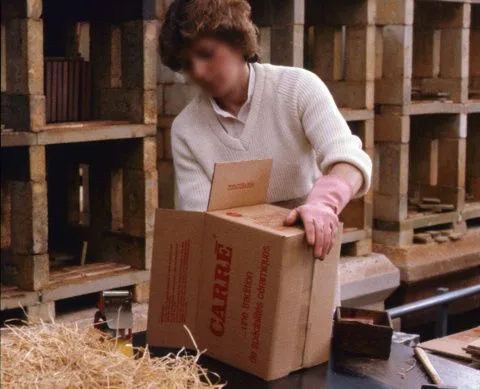
Carré is still a highly professional business today. Tiles are designed, conceived, invented and perfected on the drawing board, painted by hand in a ceramics laboratory and manufactured in two small factories — in Orriule (Béarn) and Gournay-en-Bray (Normandy). The former, hidden in rolling green countryside, was built on the site of an old pottery.
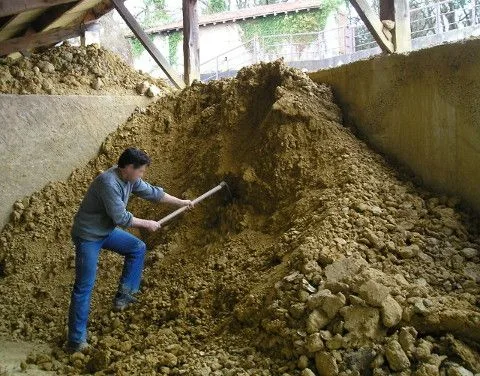
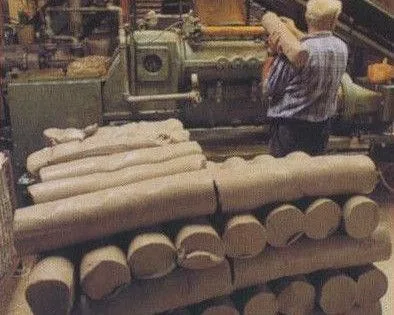
Clay, extracted on-site but also in Allier and Charente, is cleansed of its impurities, crushed and fired until it becomes chamotte, then thinned and filtered until it becomes slip. It is extruded into the shape of a loaf, ready to be transformed into a flat strip and cut by the die cutter into its definitive tile shape.
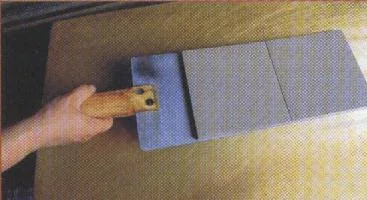
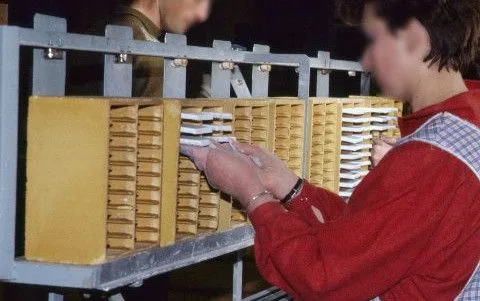
Placed on shelves by an expert hand, the soft paste dries in a drying oven. An initial firing in a tunnel kiln lined with refractory bricks gives it a biscuit form. The tiles then move slowly forward for glazing — a fine white rain that falls from a hood, propelled by a turbine or applied with a spray gun by an expert hand.
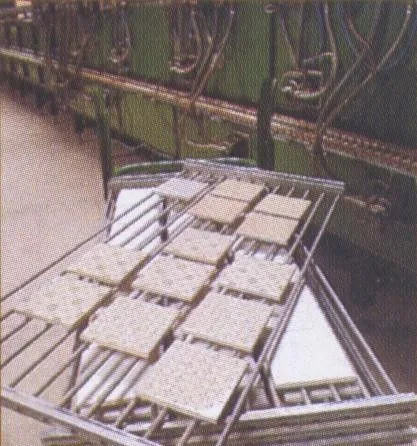
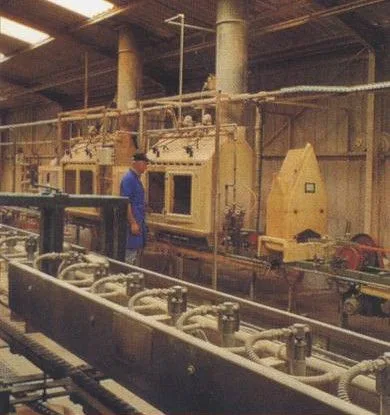
The second firing lasts twenty-four hours, hardening the paste in depth. Decorated by hand with brushes, stamps, stencils or silk-screen printing, the tiles undergo a final firing. The fire makes the colours blaze; the glaze adds brilliance and translucency.
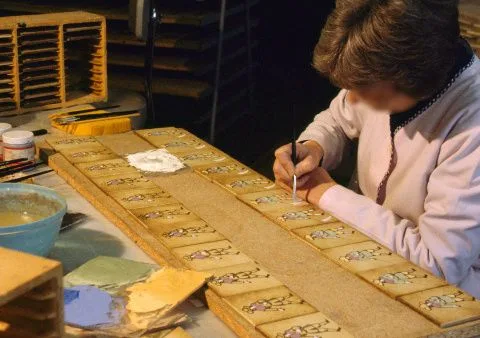
The firing process — that mysterious alchemy — sublimates what has been made by hand. At Carré, mechanisation has not pervasively invaded the manufacturing process.